Enabling fractional investment of Real Estate for the EMEA through an inuitive and accessible platform

About
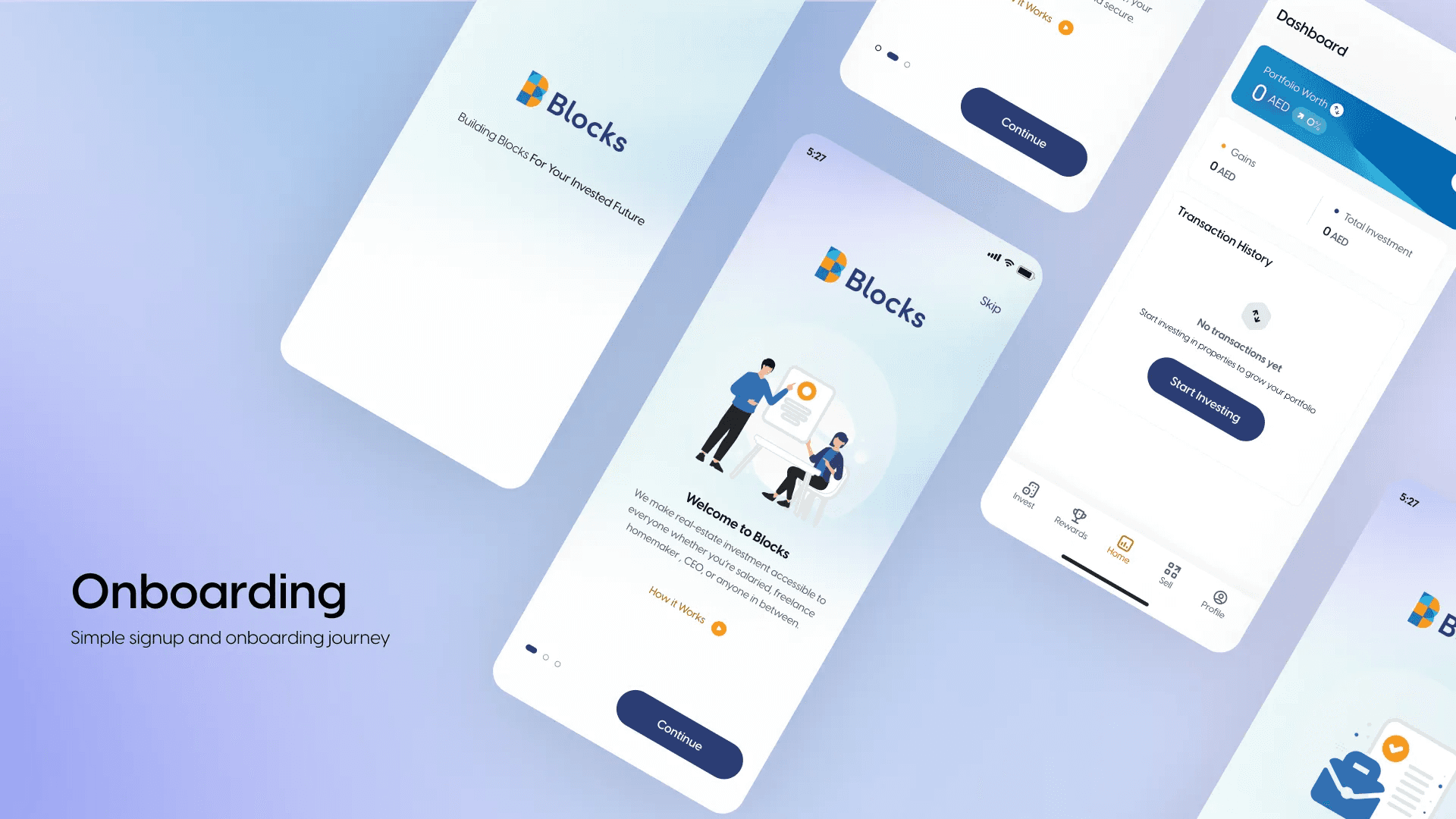
Blocks is a mobile-first real estate investment platform developed by DAO PropTech to democratize access to Dubai's booming property market. Aimed at the EMEA region, Blocks enables users to invest in fractional ownership of premium properties in Dubai with as little as AED 2,000, offering a seamless and transparent investment experience.
Timeline
The developments and individual modules described in this case study were the culmination of years of design and development efforts. This case study provides a high-level overview, touching only the surface of the extensive analysis, design iterations, challenges, research, failures, and design validations involved in solving each module's problems.
Background
When DAO PropTech decided to expand into the UAE market, the goal was to create a scalable, user-friendly mobile application that resonates with the investment behaviors and expectations of a diverse, international audience. This required reimagining the existing platform to cater to the unique regulatory environment and user preferences of the UAE.
Role & Responsibilities
As the product designer manager at DAO Proptech and leading the Blocks initiative in terms of Design and research, my responsibilities encompassed
User Research
Conducting extensive research to understand the investment behaviors and preferences of the UAE market.
UX Strategy
Developing a user experience that simplifies complex investment processes.
Design & Prototyping
Collaborated with designers to create intuitive user interfaces and interactive prototypes. Iteratively refined designs based on user feedback to enhance usability and visual appeal.
Information Architecture
Structuring content to ensure intuitive navigation and clarity.
Design Leadership
Leading the design team to ensure consistency and alignment with business goals.
I was tasked with redefining the user experience and interface of DAO PropTech's real estate investment platform to address key challenges and enhance usability. For the EMEA region, since it was a new market, extensive research was executed to understand the mental models of that audience and strategically mould the model and principles to make the experience more intuitive.
Problems and Challenges
The transition to the UAE market presented several challenges:
Market Adaption
The original platform was tailored for Pakistan and needed significant adjustments to meet the expectations of UAE investors.
Regulatory Compliance
Ensuring the app met the stringent requirements of the Dubai Financial Services Authority (DFSA).
User Trust
Building credibility in a new market where brand recognition was initially low.
Complex Investment Dynamics
Simplifying the concept of fractional ownership for users unfamiliar with such investment models.
Mobile Optimization
Designing a mobile-first experience that caters to the on-the-go lifestyle of UAE investors.
Solution
Comprehensive Research
We initiated the project with in-depth research, including:
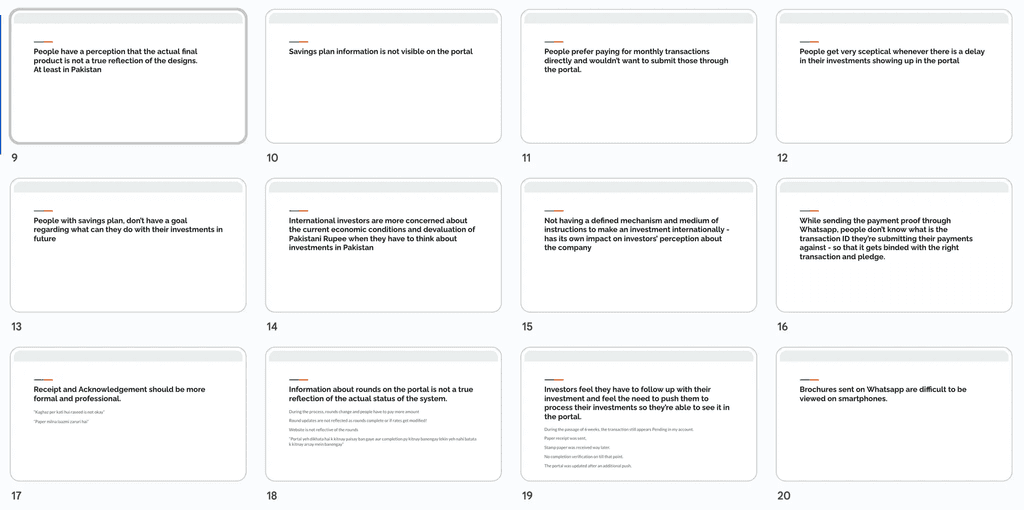
Market Analysis
Studying the UAE real estate market trends and investor behaviors.
User Interviews
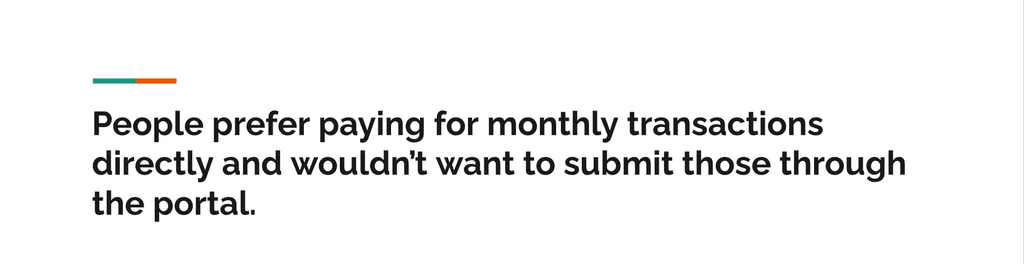
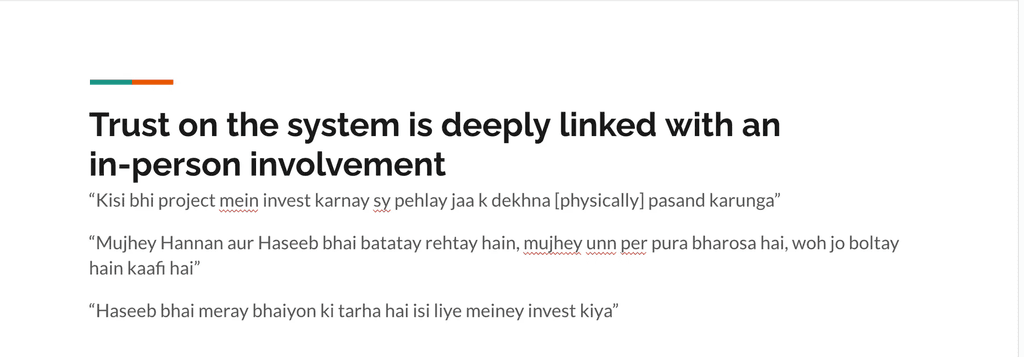
Engaging with potential users to gather insights into their needs and preferences.
Competitive Benchmarking
Analyzing similar platforms to identify best practices and areas for differentiation.
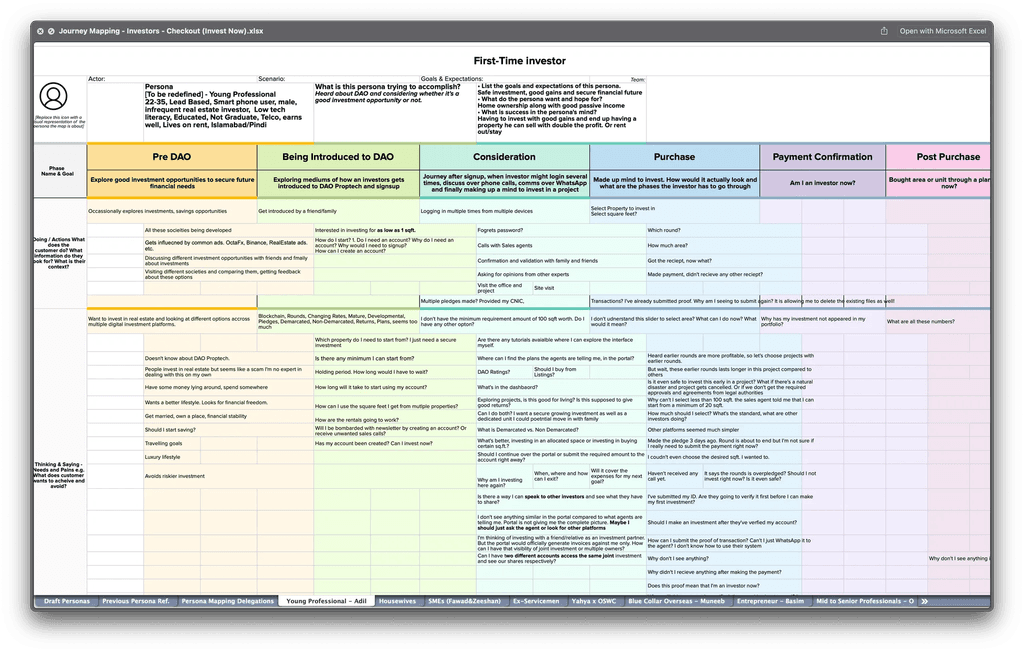
Mind Mapping and Information Architecture
Developed a structured information architecture to:
Simplify Navigation:
Ensuring users can easily find and understand investment opportunities.
Clarify Investment Processes:
Breaking down complex investment steps into digestible information.
Wireframing
Developed detailed wireframes focusing on critical user journeys, including
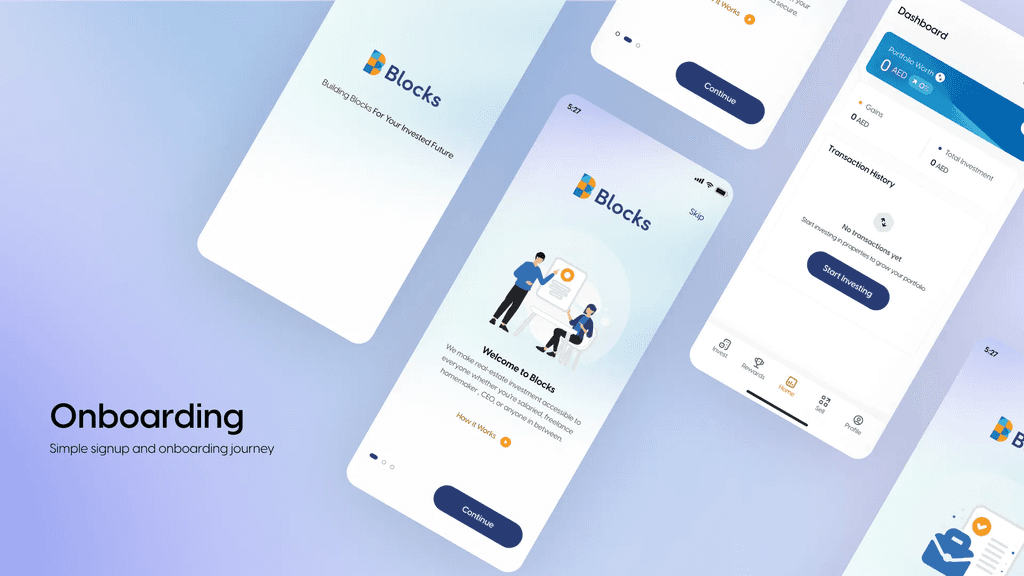
Onboarding
KYC integration for conformity standards
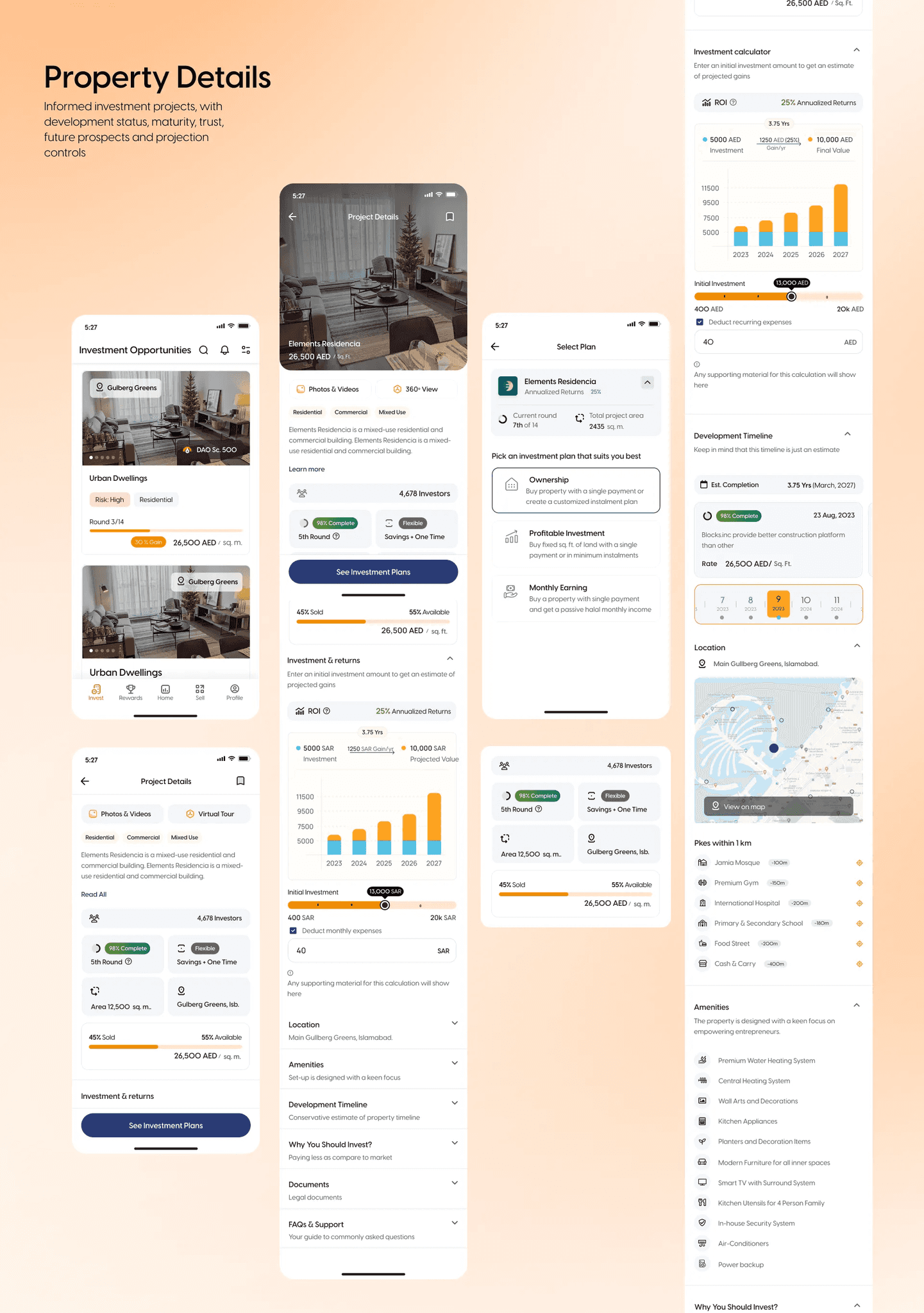
Exploring individual investments projects
Types
Risk profile, and it’s details
Plans of investments
Payments mechanism
Zero states
Investment journey
Growth, profit, & returns
Managing investments
Settings and preferences
Re-Selling and Marketplace
Customer support
Each of these sub-journeys entailed running design sprints, customer validations, strategic business alignments, failures, improvements and versions
How Might Wes
how might we make the user feel more informed about their investments statuses in real time to solve for trust,
how might we show the key differentiating factors between different projects,
how might we make it easier for the potential investors to pick a certain project based on 30-40 different factors of a real estate investment,
how might we make it easer for the users to understand the concept of fractional ownership,
how might we make the investors trust on the promise of blockchain and transactions being fully transparent,
how might we allow the investors to upgrade their plans to a full ownership of unit model as an upgrade to a fractional ownership model,
how might we make it intutive for the end consumer to effectively understand the concept of developmental rounds in a under-construction project,
Many like so constituting the different sections and touch points of the end user journey.
The wireframes served as a blueprint for the user interface design and interaction patterns, and through continuous validation with a select set of investors including potential ones, validated the key concepts and helped in driving the solution ideas from concepts to interactive interfaces.
Interface Designs
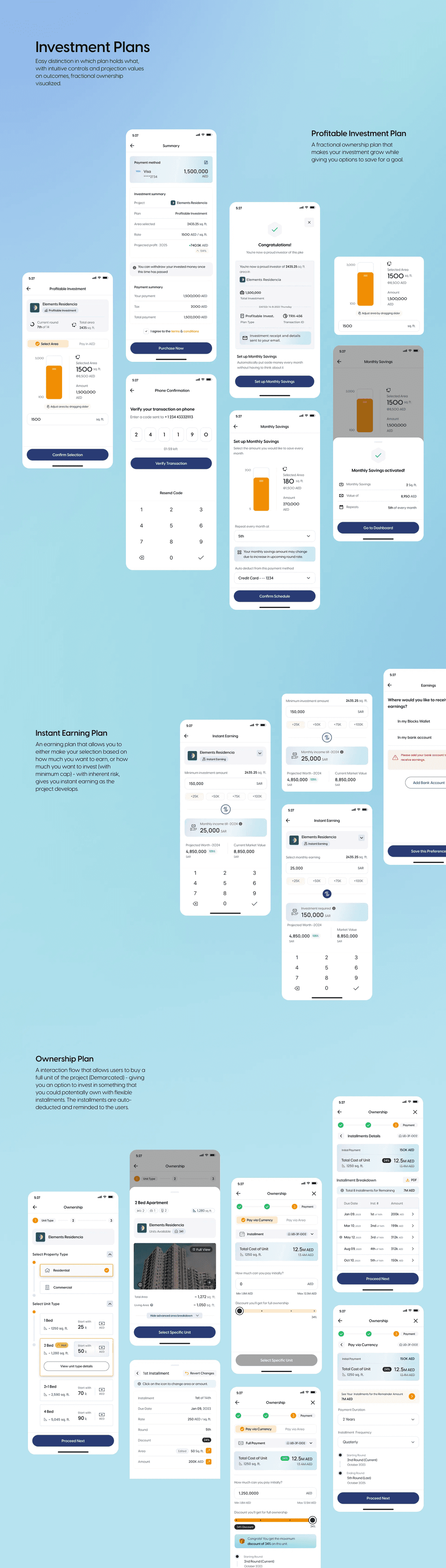
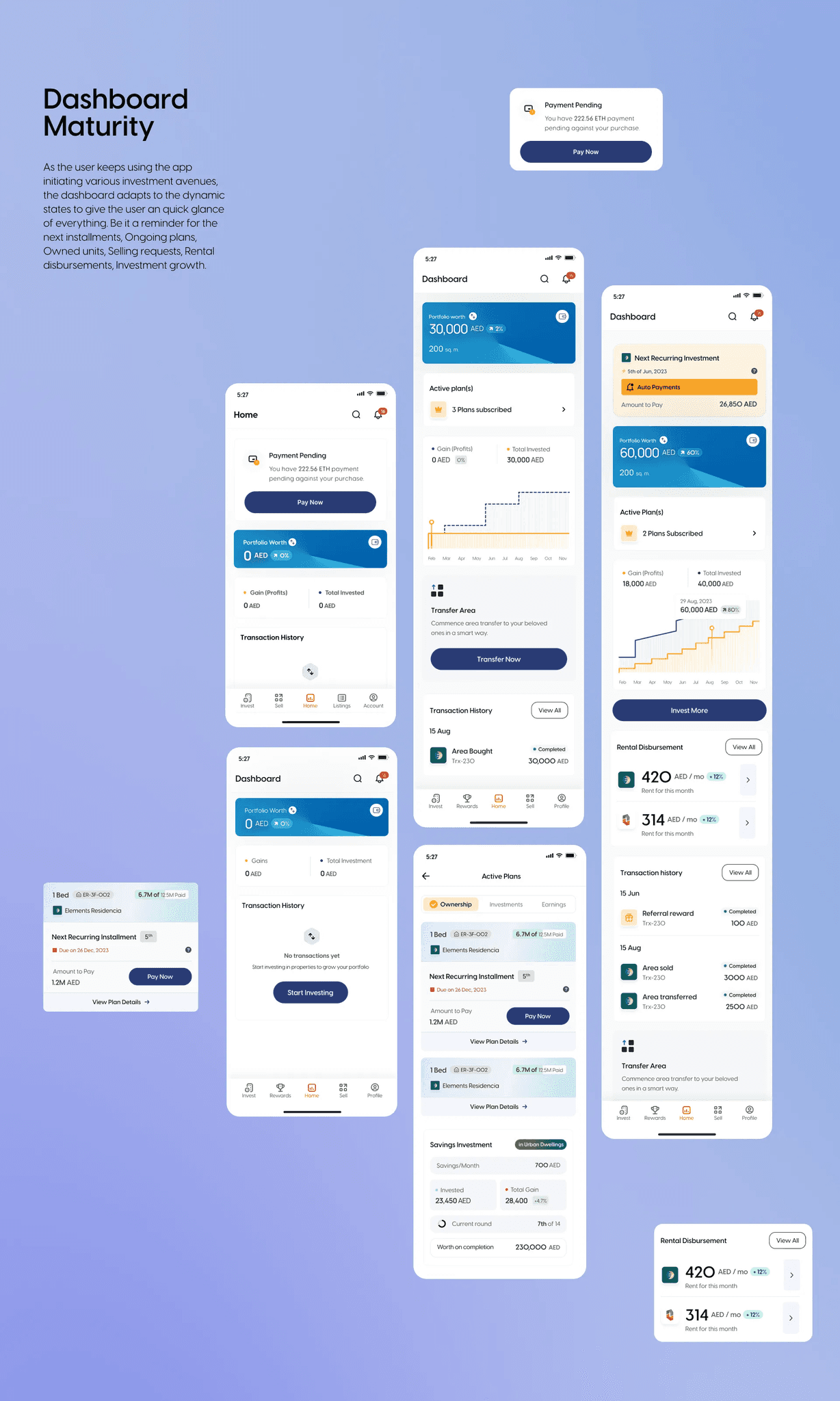
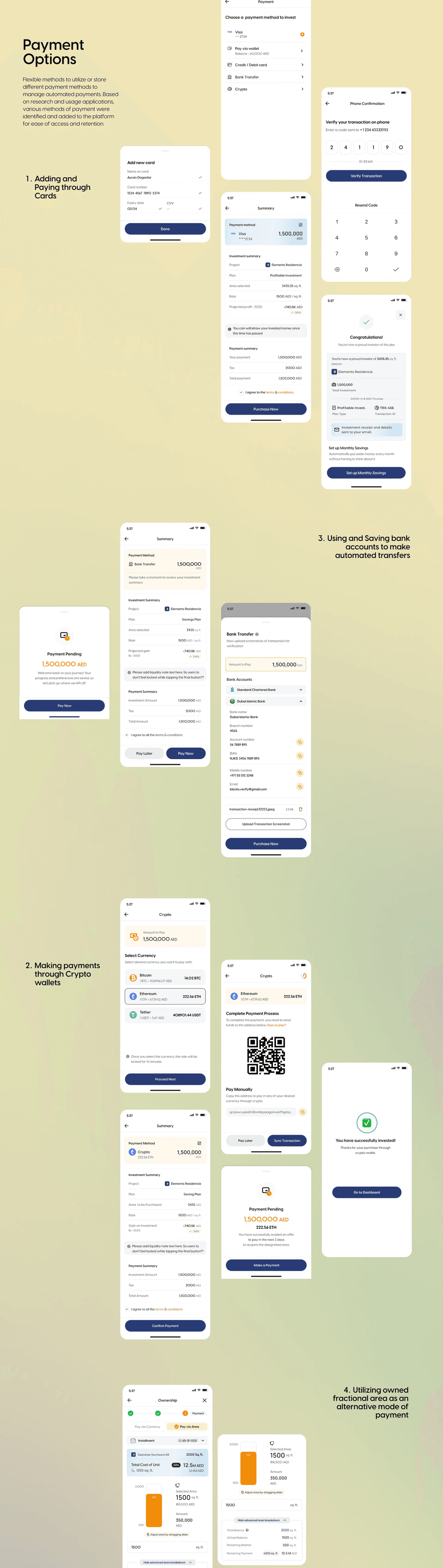
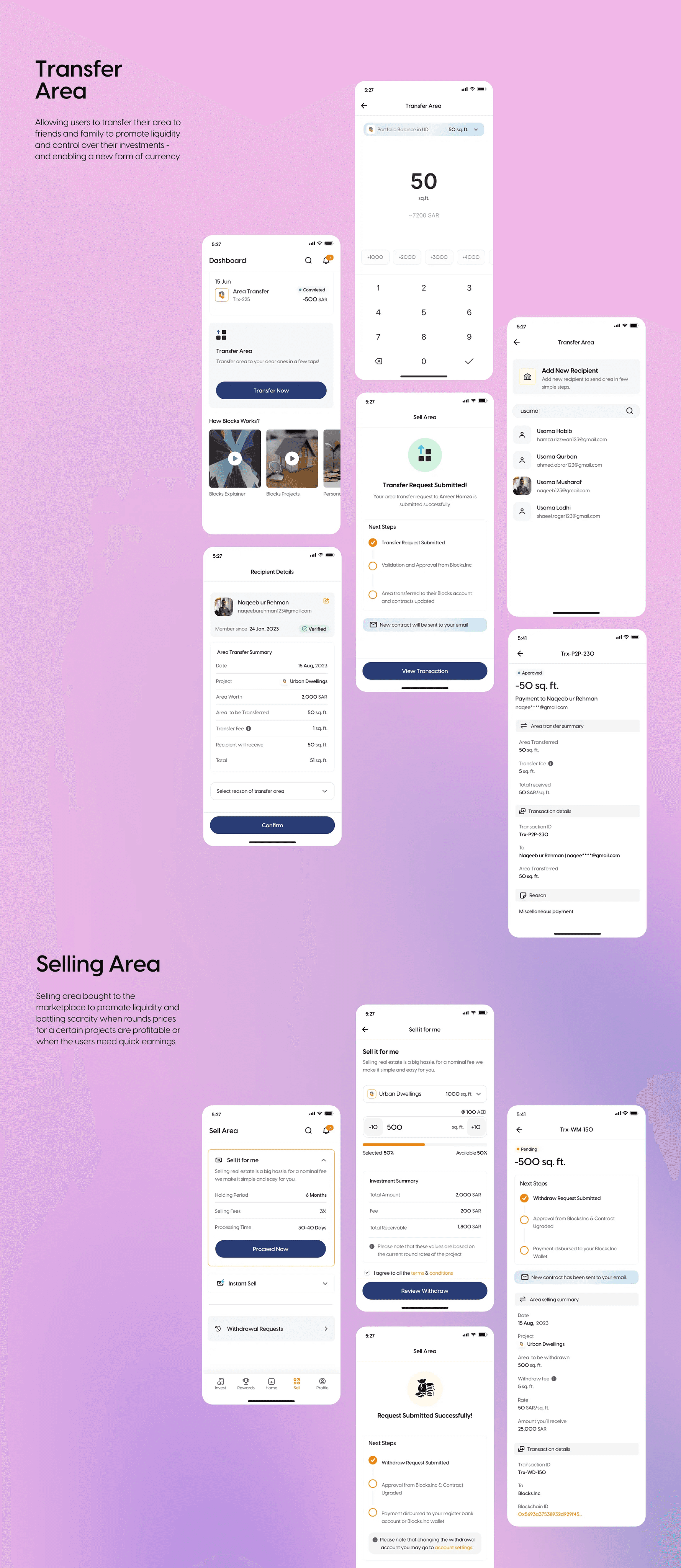
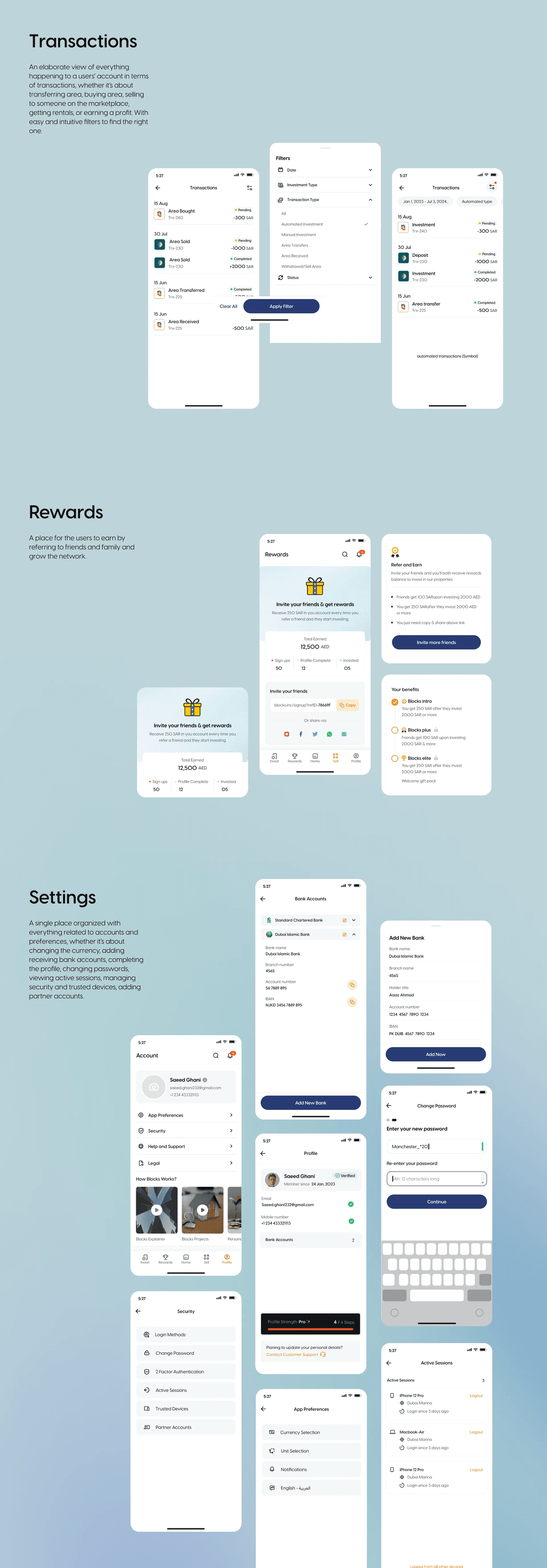
By running various product usability audits and learning from the insights gathered and keeping in mind the new solutions I started building the interfaces and user flows for each of the product goals.
Established a comprehensive design system and brand identity, ensuring consistency across responsive variants and emphasizing usability and accessibility. This involved defining typography, color schemes, iconography, and UI components tailored to the target audience's preferences - these components were later converted into a comprehensive design system for growth and scalability.
Results / Learnings
Here, the outcomes and achievements of the project are highlighted, including user feedback, adoption rates, and industry recognition.
Increased Visibility
Enhanced platform visibility through improved design and usability attracted more investors and projects.
Trusted Investors
Improved transparency and usability gained trust among investors, resulting in increased investments and successful projects.
Successful Projects
Increased project influx and successful executions demonstrated the platform's effectiveness and potential.
Portal Demand
Demand for the platform increased due to improved user experience, expanded offerings, and enhanced transparency.
The design of Blocks platform transformed real estate investment accessibility and facilitated a scalable, transparent, and user-friendly investment experience, contributing to the growth and success of the company. Whereas the ongoing new direction, product and brand upgrades will hopefully result in an even bigger success for the company.
Let’s do some awesome work
©2025